
Spray foam insulation is a great choice for any home looking to upgrade their attic insulation. From energy savings and improved comfort to health benefits, the benefits reach well beyond keeping your home warm in winter and cool in summer.
Not all types of spray foam insulation are the same, though, and knowing the difference between open-cell and closed-cell spray foam insulation can help you make the best choice for your home.
Open-Cell Spray Foam Insulation
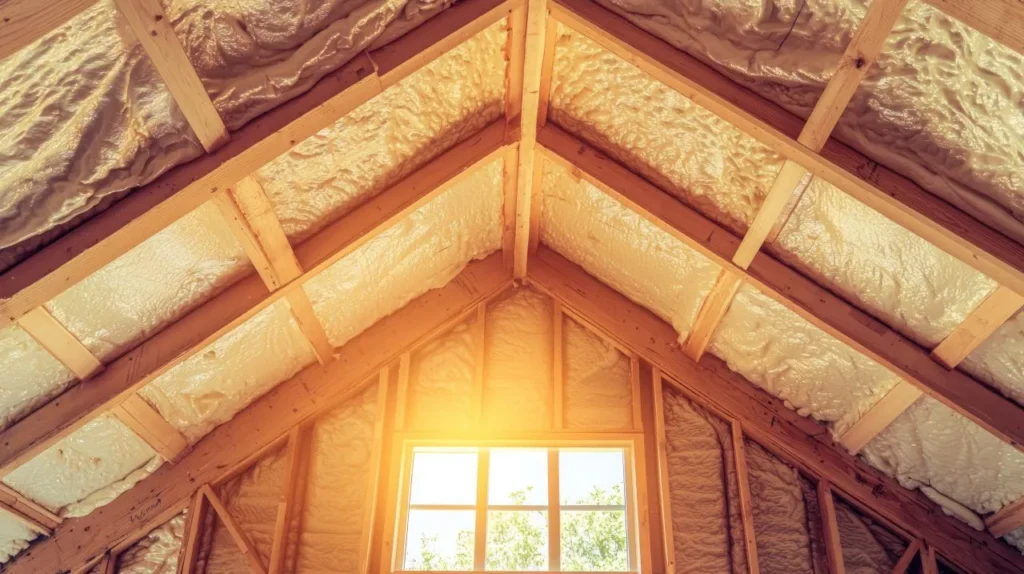
Open cell spray foam is a liquid that contains a polymer, such as polyurethane and a foaming agent. When the foam is applied to a surface, it expands and hardens and acts as an insulator.
The cell structure of open-cell spray foam insulation makes it an ideal choice for sound deadening, as it absorbs sound similar to carpet. Because it stays soft and flexible after curing, open-cell foam can move with your home as materials expand and contract over time.
Open-cell spray foam insulation also expands significantly during application, filling cracks, gaps, and irregular spaces that traditional insulation often misses. The result is an effective air seal that helps cut down on drafts and keeps indoor temperatures more consistent.
It’s a budget-friendly option, and its lighter density means you won’t need as much of it to properly cover a given area.
The Basics of Open-Cell Spray Foam Insulation
Energy:
- Lowers Heating & Cooling Costs Up To 50%
- Eliminates Air Infiltration By Creating A Complete Air Seal
- Maximum R Values in Small Areas (R 3.5-3.8/inch)
- No Decrease in R Value For Life of Product
Health:
- Complete Air Seal Eliminates Dust, Dirt, Allergens, Radon & Carbon Monoxide
- No Cavity For Rodents, Bugs, Mold, or Mildew
Structural:
- Fire Rated Material (Class 1)
- Will Not Rot or Decay
- No Maintenance Required
- Increases Strength of Roof Systems
Comfort:
- More Dense & Physical Properties Attenuate Airborne Noise More Effectively.
- Eliminates Drafts, Hot & Cold Spots: Delivers Consistent Room Temperatures.
- Peace of Mind during Inclement Weather.
Building potential:
- Existing Insulation Must Be Vacuumed or Hand Removed – 2/3 Day Projects
- Unlimited Design Versatility
- Acts as Air Barrier & Vapor Barrier
- Expands to Fill Void Cracks & Crevices & Creates an Air Seal
Closed-Cell Spray Foam Insulation
Closed-cell foam insulation, on the other hand, covers more area than open-cell spray foams. Closed-cell spray foams are better at keeping moisture out. As a result, most do not need a vapor retarder and eliminate the risk or possibility of mold growth.
Filled with gas to make the insulation stronger and easier for construction purposes, closed-cell spray foam has a dense, rigid structure that adds structural strength to walls, roofs, and floors once it cures. Its moisture resistance makes it well suited for basements, crawl spaces, rim joists, and other areas prone to dampness.
The Basics of Closed-Cell Spray Foam Insulation
Energy:
- Lowers Heating & Cooling Costs Up To 50%
- Eliminates Air Infiltration By Creating A Complete Air Seal
- Maximum R Values in Small Areas (R 6-7/inch)
- No Decrease in R Value For Life of Product
Health:
- Complete Air Seal Eliminates Dust, Dirt, Allergens, Radon & Carbon Monoxide
- No Cavity For Rodents, Bugs, Mold, or Mildew
Structural:
- Fire Rated Material (Class 1)
- Will Not Rot or Decay
- No Maintenance Required
- Increases Strength of Roof Systems
Comfort:
- More Dense & Physical Properties Attenuate Airborne Noise More Effectively.
- Eliminates Drafts, Hot & Cold Spots: Delivers Consistent Room Temperatures.
- Peace of Mind during Inclement Weather.
Building potential:
- Existing Insulation Must Be Vacuumed or Hand Removed – 2/3 Day Projects
- Unlimited Design Versatility
- Acts as Air Barrier
- Expands to Fill Void Cracks & Crevices & Creates an Air Seal
How Open-Cell and Closed-Cell Spray Foam Insulation Are Different
Both open-cell and closed-cell spray foam insulation have their value, but they play different roles in the home. The main difference between these types of insulation comes down to their cell structure.
In open-cell foam, the tiny cells are left intentionally incomplete, allowing air to fill the spaces inside the material. This gives it a softer, spongier feel and a lighter density. In closed-cell foam, the cells are fully sealed and packed tightly together, creating a denser, more rigid material.
These structural differences affect everything from how each foam handles moisture and sound to how much insulating power it provides per inch, which is why understanding them is key to choosing the right option for each part of your home.
What’s the Right Type of Spray Foam Insulation for Your Home?
Ultimately, the right type of spray foam insulation is dependent on what you’re looking for out of your spray foam insulation. Looking to absorb noise and keep costs down in areas like attics and interior walls? Open-cell spray foam is likely the better fit. If you want to maximize your home’s moisture protection in a basement, crawl space, or attic, though, closed-cell spray foam insulation may be the better choice.
You should never have to decide on your own, though. Stinson Services always starts with thorough inspections to determine where your home’s existing insulation may be lacking, and which type of spray foam will deliver the best results for each area.
From there, the team walks you through your options and explains the reasoning behind each recommendation, so you can move forward with confidence. Contact Stinson Services today to schedule your inspection and take the first step toward a more comfortable, energy-efficient home.
Talk to Stinson Services for Attic Insulation in The Twin Cities Area
At Stinson Services, we understand the role that quality insulation plays in any home. Whether it’s to keep energy prices down, maintain the comfort of your space, or absorb sound, proper insulation relies on choosing the right material and having it installed correctly.
Our team takes the time to understand your home and your goals, then recommends the spray foam solution that makes the most sense for each space. If you’re ready to make your home more comfortable and energy efficient, contact Stinson Services today for attic insulation services in the Twin Cites area.